

Branding – a suitable case for treatment?
Imposing national liveries on bus and rail misunderstands what transport branding is about
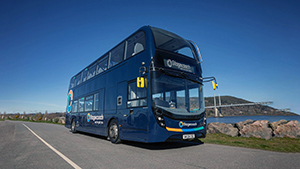 One of the most controversial announcements in 2025 in rail was the launch in December of a proposed corporate identity for Great British Railways (GBR) by the Department for Transport. This wasn’t the only public transport rebranding of 2025, either – earlier in the year, we had new corporate identities for two of the major bus groups, First Bus and Stagecoach. Arguably, though, all three are misconceived and irrelevant.
Aside from the aesthetics of the GBR design (awful, in my humble opinion, a view in which I’m not alone), there were a number of surprising aspects to this. Firstly, that the choice of brand and promotional strategy should surely be a matter for the board of the newly created organisation. Secondly, there is the practical issue of a single corporate design which only applies to a fraction of the network. And thirdly, the question of how relevant is a network-wide design is anyway.
To take these in turn, the question of authority: surely the whole point of GBR is to have a “guiding mind” for the industry, and to remove the DfT and politicians from day to day decisions – that at least has been the often expressed view of Lord Hendy. Instead, we appear to have a situation when crucial decisions are still being taken by politicians and civil servants (whose design it apparently was), rather than rail managers and their qualified marketing advisers. Could it just be, as one colleague suggested, that this – alongside the unwarranted and expensive fares freeze – is the government’s only way of pretending that things are really changing, when everybody really knows that renationalisation is largely irrelevant to the issues that the industry is facing?
Second is the issue of where the new identity will be applied. Not, presumably, in London, Merseyside, Scotland or Wales – or indeed, if Andy Burnham has his way – in Greater Manchester either. If, as expected, the Metropolitan Combined Authorities are given a role in their local rail networks, then presumably, we shall see the return of local liveries for the others as well.
Which brings me to the third issue: this is the fundamental point about branding in public transport – and this is addressed as much to First Bus and Stagecoach as it is to whoever is in charge of the railways at the moment. Namely that there is not a universal national public transport product capable of being branded successfully. Public transport, even on the railways, is overwhelmingly a local product. ORR regional rail use statistics for 2024/25 show that 50% of rail demand outside London is for travel within each local region, with another 41% of journeys going to London. In London itself, 76% of patronage travels within the capital.
It has long been argued that the most important brand is the route – whether identified by number, or route brand – whether it be the 49A or the Bakerloo Line.
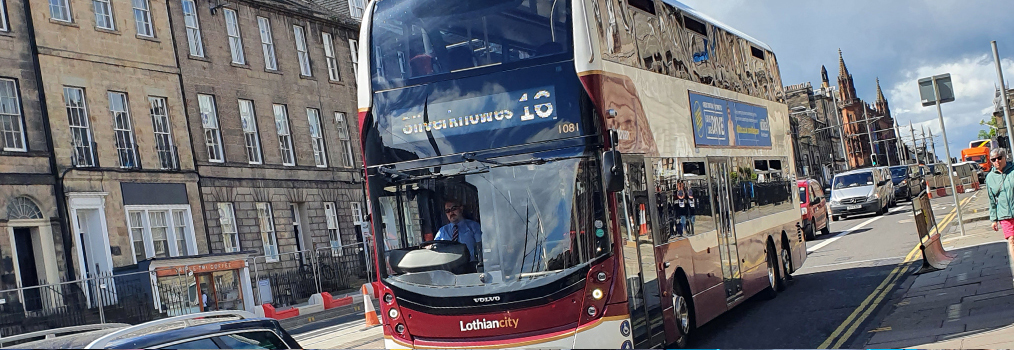
It is surely no coincidence that amongst the most successful bus operators in the UK are companies which have very strong local branding, including different liveries for different routes or groups of routes. Reading, Nottingham and Brighton are outstanding examples of this. Of the bus groups, only Go-Ahead has resisted the corporatisation of its brand – even back during the run-up to its flotation in the 1990s.
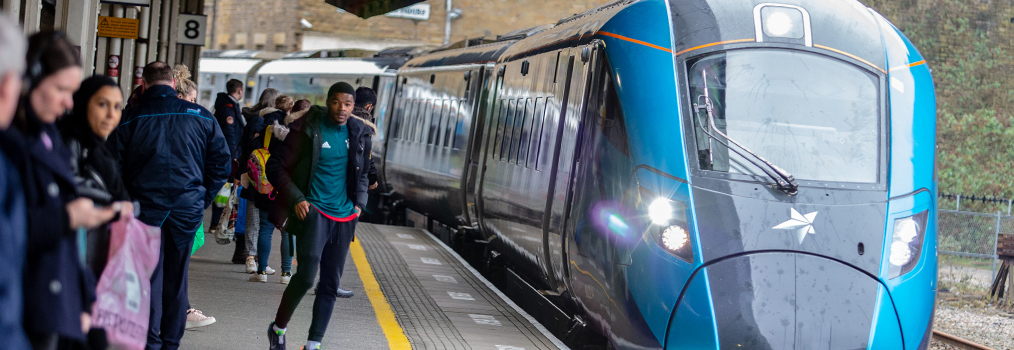
In railway terms, strong local brands such as Chiltern, TransPennine and Anglia reference their region or locality. More recently, brands such as Great Western Railway (GWR) and London North Western Railway (LNER) have referenced their historic roots as well as their routes. In this most nostalgia-conscious nation, this too can also be very powerful.
This is not just a post-privatisation phenomenon either – after all, several of today’s brands such as Gatwick Express, ScotRail and Thameslink all date back to British Rail days. Meanwhile, local brands such as MetroTrain in West Yorkshire and Merseyrail, originally adopted under the old Section 20 agreements between BR and the Passenger Transport Executives, were a powerful means of establishing local networks with a distinct identity – helping to drive patronage growth, often spectacularly (like the 86% in West Yorkshire between 1991/92 and 2003/04).
The Oxford English Dictionary classifies branding as “The application of a trademark or brand to a product; the promotion of consumer awareness of a particular brand of goods or services. Also: distinctive wording or design used to identify a particular brand.” In other words, giving a company or product a distinctive design or symbol in order to promote products and services.
Thus far, thus simple. The world is full of strong brands and memorable symbols from Coca Cola to Colgate. In our own field, we have several long-established and enduring identities: the Underground roundel in London that dates all the way back to its first use at St James’s Park station in 1908, the white coaches of National Express – a potent identity which dates back to 1972 – and of course the now revived BR “double arrow” logo from 1965.
These days, though, it’s much more complicated than that. As many marketeers recognise, the brand is about more than a logo or identity. The appearance acts as a form of shorthand for the product or service, giving a clear signal of what the customer or stakeholder can expect. Good examples are the values communicated by prestige car marques such as Bentley or Rolls Royce, food products such as Heinz condiments and sauces, or retailers like John Lewis or Marks & Spencer.
Practitioners and consultants emphasise that branding is not a one-off exercise, but has to be continuous. In transport, demographics, expectations and the market are all constantly changing, and brands should evolve to keep pace. Then there is the question of brand design: it is argued that this is about much more than choosing a colour or a logo; it starts with identifying who your stakeholders are, then how you want your brand to communicate with them, and finally managing everything to deliver the values you are trying to get across. Only then should you determine what the brand looks like in terms of the physical elements, but also in the way you run and manage the services. A successful process will then deliver the trust with your customers and improved relationships with stakeholders, in other words achieve the reputation you seek.
When set in the public transport context, this all seems to make a lot of sense. Passenger transport modes, especially since Covid, have suffered from poor public perceptions of such vital matters as reliability and predictability, with a third problem over value for money. Operators have not been helped by a perpetually hostile media or by political comments designed to score points during a time of attempted reform.
It is clear that these issues are paramount in driving the reputations of both bus and rail industries. This is a classic example of where branding can come unstuck – you can deliver the nice new logo or the flashy livery, but delivering the quality and consistency of service needed to change perceptions is a much more difficult matter. Here’s another area where emphasis on the particular can trump wider perceptions. Frequent or regular customers who have a good experience can tell their friends – “I know the railways are rotten, but I always have a good journey with [name of local TOC]” or “my local bus, the 652, is always on time”.
It seems to me that, if they’re not careful, the Government is storing up trouble for itself by adopting a new identity for the railways now, without research, without understanding, and importantly without the means yet to deliver a structured branding process. That should be a job for the chief executive and the new board at GBR. Hopefully, if they’re allowed to do it, they might improve on the lamentable quality of the DfT’s design. The current approach is especially dangerous when they do not yet have the means to make any immediate meaningful improvement in the standards of service.
As for the transport groups – and indeed the franchising authorities now entering this territory – the same process needs to be gone through. For the remaining commercial operations running under Enhanced Partnerships, the identity of their customers and stakeholders is clear. They are local people and the stakeholders are local authorities and local businesses. The brands, the identities and the services need to reflect that – and national identities designed to appeal to shareholders or overseas owners have no place in that mix.
To sum up, then: think local everybody, please – that’s the route to success!