

The Myth of “Affordable Fares”
 Long term trends point to an unsustainable gap in bus service economics between revenue earned and costs of operation.
One of the current mantras expressed by many local transport authorities and politicians is that bus fares must be “affordable” – though nobody ever quite explains what that means.
What it translates to is an unwillingness to countenance increased fares – and in many cases over the past few years to use BSIP funding to reduce fares for some or all customers. The last Tory government led the way of course, with its £2 fare cap, later increased to £3 by the present administration – whilst leaving room for authorities to introduce their own lower cap. In Greater Manchester and Merseyside, for example, the £2 maximum has been retained. Scotland is about to follow suit.
The slight problem with this approach is that it completely ignores what the services cost to operate – a figure which, sadly and for all sorts of reasons (private sector profits NOT being one of them, by the way) keeps on rising. Increased wages, higher fuel costs, government-imposed employment taxes and business rates all have their effect.
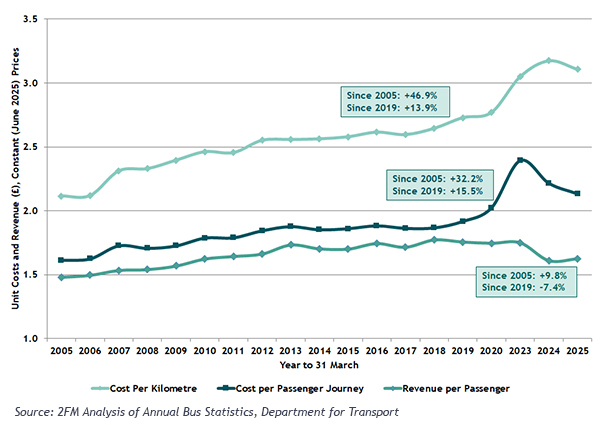
We can see the impact of all these policies in the graph below. The top line shows the cost of operating our bus networks on a per-kilometre basis, adjusted for inflation and going back to 2005. As you can see, the rise has been almost 50% since 2005, and almost 14% since 2019, the last pre-Covid year. The middle line shows the cost expressed differently, by passenger journey. In this case, the rise is just short of one third since 2005 and almost 16% since 2019. Finally, we see the bottom line – which looks at revenue per passenger journey over the same timescale. Note that the revenue figure shown includes concessionary fares reimbursement and fare cap reimbursement. This line shows a much smaller increase of just under 10% since 2005 and a fall of over 7% since 2019.
These trends are unsustainable. If they were maintained, the only course of action would be to increase the subsidy paid by government and local authorities steadily and quickly – or to cut services yet again. We’ve seen before that we cannot simply keep on using more and more taxpayers’ money to sustain our bus networks. It did not work in the 1970s, resulting in service cuts and massive fare increases, as government struggled to get borrowing under control. If funds were short then, they certainly are now – with the government’s debt pile rising and lenders becoming increasingly restive about our economic and political situation.
It’s time to level with the public and stop pretending that there is a magic bullet that can provide bus services without paying for them. After all, as former Transport Secretary and later Chancellor Alastair Darling reminded us many years ago, there are only two sources of finance – passengers and taxpayers. If the taxpayer (i.e. the Treasury) can’t or won’t pay, then the passenger has to – or there’ll be no service.